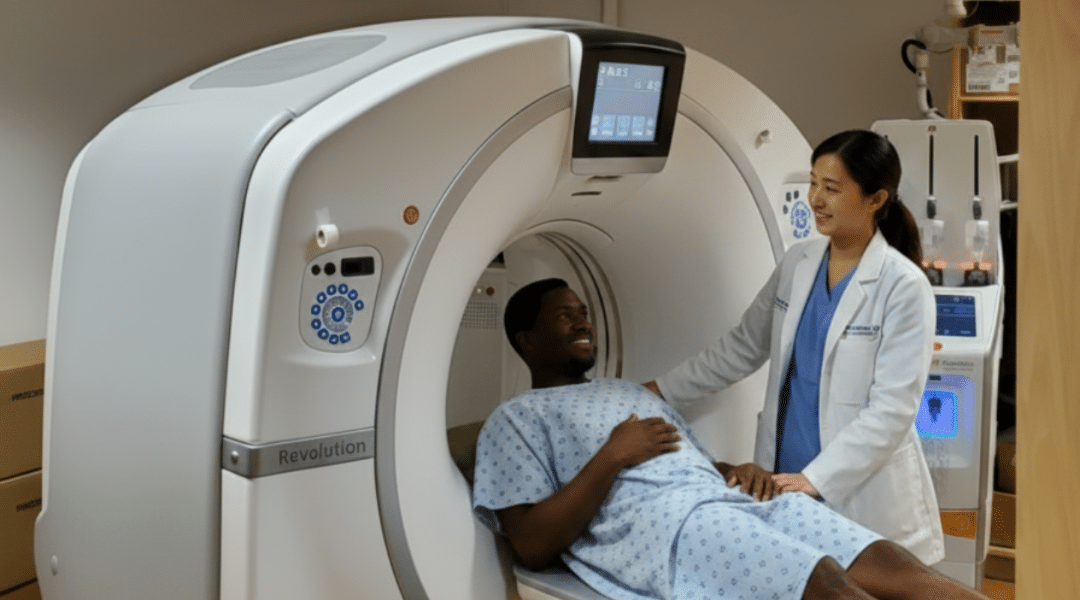


Defecography MRI, also called dynamic pelvic floor MRI, is a magnetic resonance imaging (MRI) examination that evaluates the functioning of pelvic organs, such as the bladder, rectum, or uterus, as well as the muscles that support these organs.
Performed without radiation, this examination records organ movement during simple efforts (such as pushing or evacuating), which helps better understand certain pelvic floor disorders.
Why undergo defecography MRI?
This examination may be prescribed if you experience any of the following symptoms:
- Sensation of pressure or heaviness in the lower abdomen
- Difficulty with bowel movements or feeling of incomplete evacuation
- Urinary or fecal incontinence
- Suspected pelvic prolapse (organ descent)
Defecography MRI can detect several conditions:
- Rectocele: a portion of the rectum forms a small pouch that pushes toward the vagina, which may interfere with stool evacuation.
- Enterocele: descent of a small bowel loop between the rectum and vagina, often associated with a feeling of heaviness.
- Rectal intussusception: folding of part of the rectum inside itself, which may block evacuation.
- Rectal prolapse: the rectum partially or completely protrudes outside the anus.
- Sigmoidocele: descent of a portion of the sigmoid colon toward the lower pelvis, which may cause pressure or discomfort.
- Pelvic floor descent: sagging of the muscles that support the pelvic organs, often caused by age, childbirth, or chronic straining.
- Anismus: difficulty relaxing the anal muscles during bowel movements, which prevents normal evacuation.
How to keep a healthy pelvic floor?
It’s possible to prevent or reduce pelvic floor disorders by adopting certain daily practices. For example:
- Strengthen pelvic muscles through Kegel exercises, which involve contracting and relaxing muscles as if holding back an urgent need to urinate.
- Maintain a healthy weight, as excess weight can increase pressure on pelvic organs.
- Adopt good bowel habits (avoid constipation, stay well hydrated, eat fiber) to reduce straining during bowel movements.
- Avoid repeatedly lifting heavy loads.
These simple actions can help preserve pelvic floor tone throughout life. To learn more, consult the complete article from Protégez-Vous: How to Keep Your Pelvic Floor in Shape.
For an appointment
Thanks to the expertise of our specialized radiologists and state-of-the-art equipment, we perform very high-quality defecography MRI examinations in a safe and professional environment. Please note that a referral from a healthcare professional is required for this examination. Since MRI is not covered by RAMQ, fees will apply.
To schedule a pelvic floor/defecography MRI examination, you can click here.