

As we mark World Heart Day on September 29, let us remember the importance of taking care of our cardiovascular health.
Some cardiovascular diseases can progress silently for several years. A coronary calcium scan is an imaging test that detects and measures calcium deposits in the coronary arteries. This information can help physicians better assess the risk of coronary artery disease in certain people.
What is a coronary calcium score?
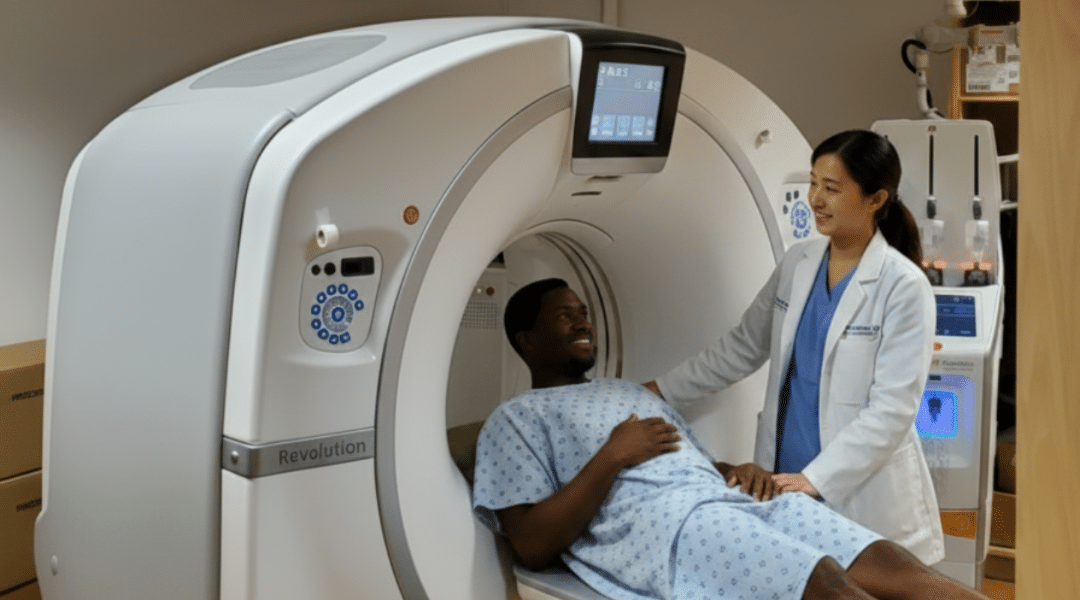
A coronary calcium score is obtained using a computed tomography (CT) scan.
It measures the calcium in atherosclerotic plaques that can build up in the arteries supplying blood to the heart. The more calcium detected, the more extensive the coronary atherosclerosis.
Why measure calcium in the coronary arteries?
Plaque can gradually build up in the arteries, sometimes without causing symptoms.
A coronary calcium score provides physicians with additional information for assessing cardiovascular risk, alongside factors such as age, smoking, blood pressure, cholesterol, diabetes, and family history.
Who may benefit from a coronary calcium score?
A coronary calcium scan is not routinely recommended as a screening test for everyone.
It may be considered for certain people without symptoms when a physician wants to better determine their cardiovascular risk. Whether it is appropriate depends on factors such as age, risk factors, and personal and family medical history.
Does a calcium score apply equally to women and men?
Yes. A calcium score can be useful for both women and men when their risk profile indicates that this test may be appropriate.
However, men tend to develop coronary artery calcification earlier than women. In women, cardiovascular risk increases notably with age and after menopause.
This is why a calcium score should not be interpreted on its own: age, sex, and other cardiovascular risk factors are also taken into consideration by the physician.
What happens during the test?
A coronary calcium score is obtained using a CT scan that produces images of the heart to detect and measure calcifications in the coronary arteries.
The test is quick, non-invasive, and performed without an injection of contrast material. The images are then analyzed to calculate the coronary calcium score.
What does the coronary calcium score mean?
A score of 0 means that no coronary artery calcification was detected. A score above 0 indicates the presence of calcium, and the higher the score, the greater the amount of calcified plaque detected.
However, the result should not be interpreted on its own. A physician must assess it in light of other risk factors. In addition, a score of 0 does not completely rule out coronary artery disease, as some plaques may not be calcified.
Coronary calcium scoring and coronary CT angiography: What is the difference?
Both tests use computed tomography, but they serve different purposes.
A coronary calcium scan measures the amount of calcium in the coronary arteries and does not require an injection of contrast material.
Coronary CT angiography provides a more detailed view of the coronary arteries and generally requires the administration of contrast material.
The physician determines which test is appropriate based on the clinical situation.
Can a coronary calcium score prevent a heart attack?
A coronary calcium score cannot prevent cardiovascular disease on its own, nor can it predict with certainty whether a heart attack will occur.
However, it can provide useful information about the presence of coronary atherosclerosis and help physicians determine appropriate preventive measures or follow-up care.
Maintaining healthy lifestyle habits remains essential: do not smoke, stay active, eat a balanced diet, and ensure that blood pressure, cholesterol, and diabetes are properly monitored.
Taking care of your heart starts with knowing your risk factors
World Heart Day is an opportunity to remember that cardiovascular prevention does not necessarily begin only when symptoms appear.
Knowing your risk factors and discussing them with a healthcare professional can help determine the preventive measures and tests best suited to your situation.
Radiméd offers coronary calcium scoring as part of its cardiac imaging services. A medical referral is required to book an appointment.